


 Jan 13th, 2026
•
Jan 13th, 2026
•  Gaby Gerges
If you’ve ever stepped into a car that’s been parked in the sun, you already know how intense the heat can be. The steering wheel feels hot to the touch, the seats are uncomfortable, and even with the air conditioning on full blast, it takes time for the cabin to cool down.
This naturally leads to an important question:
Does window tint actually reduce heat — or does it just make the car darker?
The short answer is yes, window tint does reduce heat, but how it does so — and how much it helps — depends on the science behind the film.
Let’s break it down clearly.
Where Does Heat Inside a Car Come From?
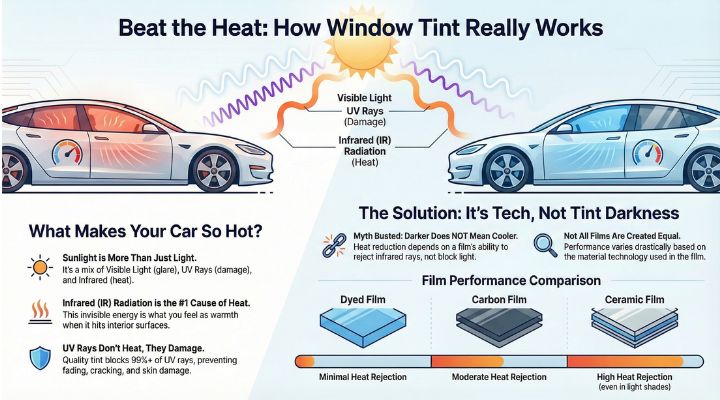
Sunlight reaching your car isn’t made of just one type of energy. It’s a mix of three main components:
1. Visible Light: This is the light you can see. It affects brightness and glare, but it is not the main cause of heat.
2. Infrared Radiation (IR): This is the primary source of heat inside a car. Infrared energy is invisible, but you feel it as warmth when sunlight hits surfaces.
3. Ultraviolet Rays (UV): UV rays don’t significantly heat the cabin, but they damage skin, eyes, dashboards, leather, and upholstery over time.
Key point: A car feels hot mainly because of infrared radiation, not because it’s bright inside.
Infrared Rejection: How Tint Actually Reduces Heat
High-quality window tint works by blocking or reflecting infrared radiation before it enters the cabin.
This is measured using infrared rejection (IR rejection) — a percentage that shows how much heat-causing energy is prevented from passing through the glass.
- Basic dyed films block very little infrared heat
- Advanced films (especially ceramic) can block a significant portion of infrared energy, even if the tint looks relatively light
This is why two cars with similar-looking tint can feel completely different inside.
High-infrared-rejection films are most effective when professionally installed, which is why many drivers in hot climates choose a professional car window tinting service in Dubai that uses advanced film technology rather than basic dyed options.
What Is Total Solar Energy Rejected (TSER)?
Another important metric you may hear about is TSER — Total Solar Energy Rejected.
TSER represents how much overall solar energy (infrared + visible light + UV) is blocked by the film.
- A higher TSER generally means better overall heat reduction
- TSER is affected by tint shade, film material, and technology
However, TSER alone doesn’t tell the whole story.
A darker film may increase TSER by blocking visible light, without significantly improving infrared rejection.
That’s why film technology matters more than shade.
UV Protection: Not About Heat, But Still Essential
Almost all professional-grade window films block over 99% of ultraviolet rays.
While UV rays don’t heat the cabin much, they:
- Cause dashboard cracking and fading
- Damage leather and fabric
- Contribute to skin aging and long-term eye damage
Even clear or lightly tinted films can offer excellent UV protection, making them useful for drivers who want protection without darker glass.
Does Window Tint Actually Lower Cabin Temperature?
Yes — but realistically.
Window tint reduces how fast heat builds up and helps the air conditioning cool the car more efficiently. In real-world conditions, this means:
- The car feels less oppressive when you enter
- The AC reaches a comfortable temperature faster
- Interior surfaces don’t get as hot
- Less strain on the air-conditioning system
Exact temperature differences vary depending on:
- Sun exposure time
- Tint quality
- Glass surface area
- Vehicle design
There is no fixed number that applies to every car, and any claim of dramatic temperature drops without conditions should be viewed cautiously.
In practice, real heat reduction depends on film quality, correct installation, and local climate conditions, which is why results are most consistent when tinting is done through a mobile car window tinting service in Dubai using heat-rejection films.
Common Myths About Heat Reduction
❌ Darker Tint Always Means Less Heat
Not true. Darkness mainly reduces visible light. Heat reduction depends on infrared rejection, not shade.
❌ All Window Tints Reduce Heat
Low-quality or decorative films may darken glass but provide minimal heat protection.
❌ Factory Glass Is Enough
Factory glass blocks some UV, but very little infrared heat.
❌ Cheap Tint Works Almost the Same
Lower-grade films often fade, lose effectiveness, and may even increase heat absorption over time.
Why Results Can Differ From One Car to Another
Heat reduction isn’t only about the film itself. Real-world factors include:
- Windshield size and angle
- Amount of glass surface
- Interior color (dark interiors absorb more heat)
- Parking habits
- Whether the car is moving or stationary
This explains why the same tint may feel slightly different across vehicles.
Film Types and Heat Performance
In simple terms:
- Dyed films: Reduce glare, minimal heat rejection
- Carbon films: Moderate heat reduction, better durability
- Ceramic films: High infrared rejection, stable performance, no signal interference
Ceramic films are effective without needing dark shades, which is why they are often recommended in hot climates.
Why This Matters Especially in Hot Climates
In regions with strong sun exposure and frequent traffic stops, heat buildup becomes more than just discomfort.
Effective heat-rejection tint helps:
- Improve daily driving comfort
- Reduce AC workload
- Protect interior materials
- Improve focus and reduce fatigue
- Create a safer environment for passengers, especially children
Final Verdict: Science Meets Reality
So, does window tint really reduce heat?
Yes, when the film is designed to block infrared radiation.
The biggest difference doesn’t come from how dark the tint looks, but from what the film is engineered to block. When the right technology is used and properly installed, window tint makes a noticeable, practical difference in cabin comfort, without sacrificing visibility.
Heat reduction isn’t magic.
It’s physics, materials, and correct application working together.
About the Author
Gaby Gerges
Marketing Manager at AutoHub | CDMA Certified
Dedicated to helping UAE drivers make smarter, safer car-buying decisions.