


 Jan 20th, 2026
•
Jan 20th, 2026
•  Gaby Gerges
Car window tinting is often seen as a one-time upgrade. Once it’s installed, many drivers assume it will last forever. In reality, window tint has a limited lifespan, especially in Dubai’s extreme heat and sun exposure.
If your car still has its original tint from years ago, there’s a good chance it’s no longer performing the way you think it is — even if it still looks “dark enough.”
So how do you know when it’s time to replace your window tint? And what happens if you don’t?
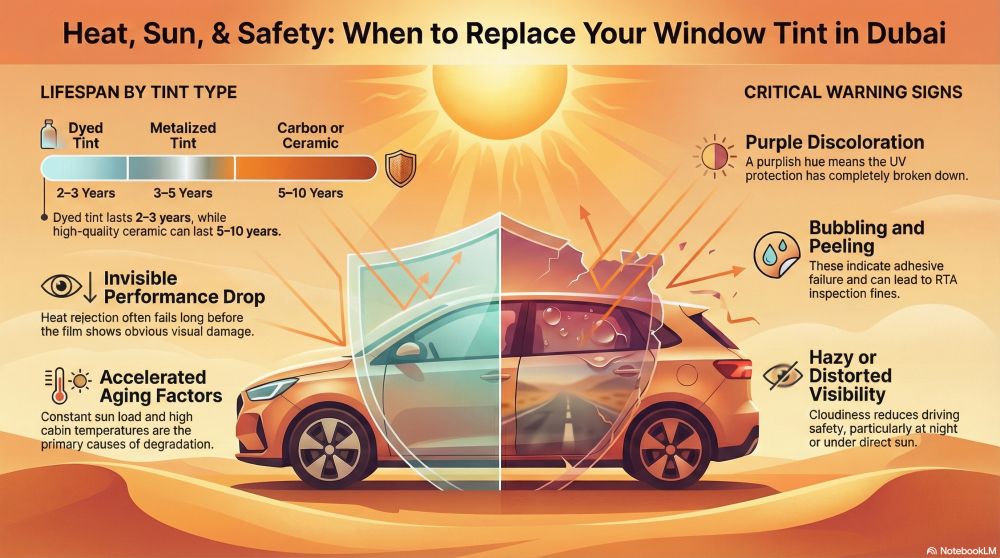
Window tint lifespan varies by film type and installation quality. In Dubai’s climate, heat rejection performance often declines before visible damage appears.
How Long Does Car Window Tint Last in Dubai?
The lifespan of window tint depends on the type of film, installation quality, and exposure to heat.
In Dubai’s climate, typical lifespans are:
- Dyed tint: around 2–3 years
- Metalized tint: 3–5 years
- Carbon or ceramic tint: 5–10 years (sometimes longer with proper care)
Constant UV exposure, high cabin temperatures, and daily sun load all accelerate aging. Even high-quality tint will eventually degrade under these conditions.
Common Signs Your Window Tint Needs Replacement
Many drivers only consider replacing tint when it looks obviously damaged. But performance often drops long before visual failure becomes obvious.
Here are the most common warning signs:
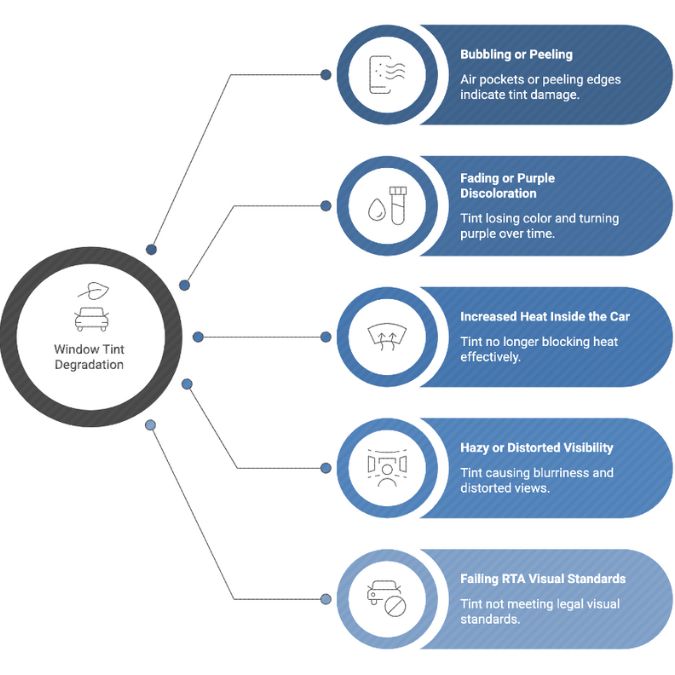
1. Bubbling or Peeling
Small air bubbles or peeling edges mean the adhesive layer is failing. Once this starts, the tint will continue to deteriorate and may no longer be legal.
2. Fading or Purple Discoloration
A purplish or washed-out tint is a clear sign that UV protection has broken down. At this stage, the tint blocks far less heat than it used to.
3. Increased Heat Inside the Car
If your car feels noticeably hotter than before — even though the tint is still present — it may be because the film is no longer blocking infrared heat effectively, as explained in how window tint actually reduces heat.
If heat rejection has dropped significantly, replacing the film with a professional car window tinting service in Dubai can restore comfort and ensure the tint remains fully legal and effective in local conditions.
4. Hazy or Distorted Visibility
Old tint can become cloudy or uneven, especially at night or under strong sunlight. This affects visibility and driving safety.
5. Failing RTA Visual Standards
Even if your tint percentage was originally legal, aged or damaged film can still result in fines or inspection issues.
Is Old Window Tint Still Legal in Dubai?
Dubai regulations focus not only on tint percentage, but also on clarity and condition.
Tint that is:
- bubbled
- peeling
- discolored
- reducing visibility
Window tint can be considered non-compliant, even if the shade itself is within legal limits.
In other words, age and condition matter, not just darkness.
What Happens If You Don’t Replace Old Tint?
Delaying tint replacement doesn’t just affect comfort — it can have real consequences:
- Reduced heat rejection → higher AC load
- Increased glare → reduced visibility
- Interior fading and cracking
- Potential fines during inspections
- Poor night driving visibility
In some cases, degraded tint can even trap heat unevenly, making the cabin feel worse than having no tint at all.
Can Tint Be Removed and Replaced Safely?
Yes — but only if it’s done correctly.
Improper removal can:
- Scratch glass
- Damage defroster lines
- Leave adhesive residue
Professional replacement ensures:
- Safe removal of old film
- Clean glass preparation
- Proper curing of new tint
- Long-term performance and clarity
Professional removal and replacement ensure long-term performance, especially when done using high-quality films designed for Dubai heat.
How Often Should You Replace Your Window Tint?
As a general rule:
- Inspect tint condition every 2–3 years
- Replace immediately if you notice bubbling, fading, or heat returning
- Upgrade older tint if you’re still using dyed or low-quality films
Replacing tint isn’t about appearance — it’s about performance, safety, and compliance.
Final Thoughts
Window tint is not a lifetime product. In Dubai’s climate, even a good tint eventually loses its effectiveness.
If your car feels hotter than it used to, visibility isn’t as clear, or your tint is showing signs of wear, replacement is not just recommended — it’s necessary.
Choosing the right time to replace your window tint helps maintain cabin comfort, protect your interior, and ensure your car remains safe and compliant on the road.
About the Author
Gaby Gerges
Marketing Manager at AutoHub | CDMA Certified
Dedicated to helping UAE drivers make smarter, safer car-buying decisions.